
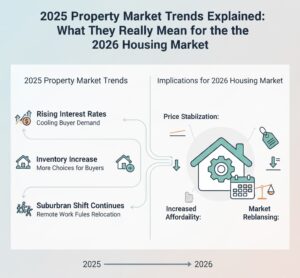
2025 reshaped the U.S. housing market with slower price growth, high rates, and rising ownership costs. Here’s what those trends mean for buyers, sellers, and investors heading into 2026.
Are we finally turning the corner or just catching our breath before the next housing shift?
If 2025 felt like a confusing year for real estate, you’re not alone. After half a decade of breakneck price growth, bidding wars, and pandemic-fueled migration, the housing market didn’t crash but it didn’t roar either. Instead, it paused, recalibrated, and quietly reset expectations.
This blog breaks down what really happened in the 2025 property market and, more importantly, what those shifts mean for 2026. Using data-driven insights from Cotality and real-world examples from across the U.S., we’ll explore prices, interest rates, migration, affordability pressures, and where opportunities and risks are emerging next.
Whether you’re a buyer waiting on the sidelines, a homeowner weighing your next move, or an investor planning for 2026, this guide is built to help you move forward with clarity and confidence.
2025: The Year the Housing Market Recalibrated
2025 didn’t deliver dramatic headlines but it quietly rewired the housing market.
Instead of rapid appreciation and runaway demand, the year brought slower price growth, elevated borrowing costs, and fragile buyer confidence. These weren’t signs of collapse; they were signs of a system adjusting after years of imbalance.
Our housing market isn’t going to be rebalanced by next year, or even into 2027. It will happen slowly and gradually.
— Dr. Selma Hepp, Chief Economist, Cotality
Let’s unpack the defining trends that shaped 2025 and how they point toward 2026.
1. Home Price Growth Slowed on Purpose
In 2025, nominal home prices rose just 1.8% nationwide, well below inflation. In real terms, prices actually declined.
Why this matters
- Buyers gained breathing room after years of rapid appreciation
- Sellers lost pricing power, especially in oversupplied markets
- Affordability stopped getting worse even if it didn’t improve dramatically
Real-life example
- Austin, TX: After double-digit annual gains during the pandemic, price growth flattened as new listings surged. Sellers began offering concessions like closing-cost credits instead of price hikes.
- Boston, MA: Prices held firmer thanks to tight inventory and a resilient job market, showing how regional dynamics matter more than national averages.
What it means for 2026
Cotality expects real prices to remain mostly flat in 2026. That stability not a boom could rebuild buyer confidence, especially if mortgage rates ease.
2. Interest Rates Stayed High and Changed Buyer Psychology
Mortgage rates hovered near multi-year highs throughout 2025, driven by persistent inflation.
The impact
- Buyers recalculated budgets and delayed purchases
- Sellers hesitated to give up low-rate mortgages
- Transaction volume stagnated despite rising inventory
Real-life example
A first-time buyer in Phoenix earning $85,000 qualified for a $425,000 home in 2022. In 2025, with higher rates, that same buyer’s budget dropped closer to $350,000 forcing compromises on location or home size.
What it means for 2026
Cotality economists expect mortgage rates to settle closer to 6%, not return to pandemic lows. That “new normal” could restart activity as buyers and sellers adjust expectations.
3. Migration Slowed and Split by Generation
The pandemic-era rush to the Sun Belt cooled in 2025.
What changed
- Overall domestic migration slowed
- Younger workers prioritized affordability and job access
- Older households reconsidered high insurance and tax costs
Real-life example
- Florida: Once a migration magnet, now faces slower in-migration and rising delistings as insurance costs surge.
- Midwestern metros like Cleveland and Milwaukee quietly gained younger buyers seeking stable prices and remote-work flexibility.
What it means for 2026
Markets that relied heavily on migration-driven demand especially in the South and West may face continued price pressure unless population growth rebounds.
Generational migration flow chart showing Gen Z/Millennials vs. Boomers.
4. Inventory Rose but Buyers Stayed Cautious
By late 2025, inventory had increased for nearly two straight years. Yet sales remained muted.
Why buyers hesitated
- High monthly payments
- Economic uncertainty
- Rising non-mortgage costs
Real-life example
In Dallas–Fort Worth, listings climbed, but pending sales lagged. Many homes sat longer, prompting price cuts or seller withdrawals instead of quick deals.
What it means for 2026
Cotality projects home sales to rise about 7% in 2026 not a surge, but a meaningful step toward normalcy.
5. The Hidden Affordability Crisis: Non-Mortgage Costs
Affordability in 2025 wasn’t just about mortgage rates.
Insurance, property taxes, and utilities jumped nearly 30% nationwide.
States under pressure
- Florida: Escrow payments up 55%
- Colorado: Escrow payments up 57%
Cotality forecasts insurance premiums to rise another 8% in 2026, outpacing inflation.
Real-life example (step-by-step)
A Florida homeowner in 2023 vs. 2025
- Mortgage payment: unchanged
- Insurance premium: doubled
- Property taxes: reassessed higher
- Total monthly cost: up hundreds of dollars
This strain explains rising delinquencies in parts of the South and Midwest.
6. Equity Helps Owners But Locks Out New Buyers
Homeowners with equity can absorb rising costs. Renters and first-time buyers cannot.
The divide
- Existing owners: buffered by equity gains
- New buyers: face limited supply and higher monthly costs
What it means for 2026
Without meaningful supply expansion or cost relief, access to homeownership will remain constrained, even in a stabilizing market.
Actionable Strategies for 2026
For Buyers
- Focus on total monthly cost, not just the purchase price
- Explore secondary metros with stable job growth
- Negotiate seller concessions aggressively
For Sellers
- Price realistically from day one
- Budget for insurance and tax transparency
- Offer incentives instead of chasing peak pricing
For Investors
- Watch insurance-heavy markets carefully
- Prioritize cash-flow resilience over appreciation
- Stress-test deals for rising escrow costs
Key Takeaways
Benefits
- Slower price growth improves long-term affordability
- Inventory gains give buyers more choice
- Market stability rebuilds confidence
Risks
- Rising insurance and tax costs
- Regional oversupply in Sun Belt markets
- Persistent affordability barriers for first-time buyers
Real-world application
- Markets with balanced supply show steadier prices
- Areas with high escrow growth see more delinquencies
Future Outlook: What Comes After 2026?
Looking beyond 2026, expect:
- Gradual normalization, not rapid recovery
- Mortgage rates stabilizing near historical averages
- Continued regional divergence
- Policy and insurance reform becoming central housing issues
The housing market’s role as a long-term wealth engine remains intact but patience will be required.
Conclusion: A Slow Healing, Not a Sudden Boom
2025 reminded us that housing markets don’t reset overnight. Instead, they heal slowly, unevenly, and region by region. As we head into 2026, the outlook isn’t flashy but it is constructive.
Stability, not speculation, will define the next chapter.
Are you planning to buy, sell, or invest in 2026? Start by reassessing your strategy with today’s realities not yesterday’s expectations. The opportunities are there for those who prepare early and act thoughtfully.
What part of the housing market do you think will change the most next year prices, rates, or affordability?
Let’s hear your thoughts in the comments 👇